
The Lifelong Learning Mind Map helps provide tips, techniques and strategies to help you become a lifelong learner and therefore gain the edge that is required to succeed in life. The Mind Map first takes a look at a term first conceptualized by Anthony Robbins – CANI. CANI stands for Constant and Never-ending Improvement. Next, the Mind Map delves into 3 fundamental laws of lifelong learning, presents the skills, mindset and behaviors that are required in order to become an accomplished lifelong learner, and concludes by taking a look at several strategies that will help you develop the habit of lifelong learning on a daily basis.
Read More»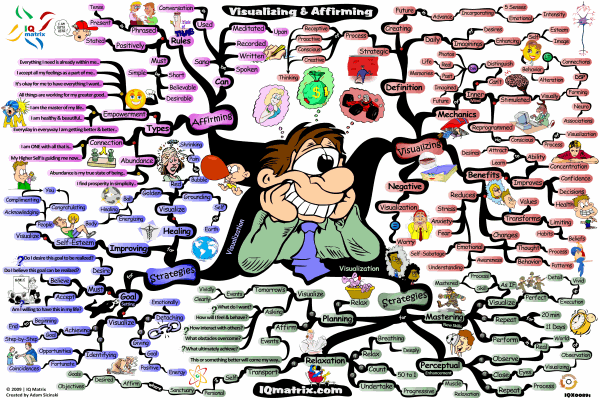
The Visualization and Affirmations Mind Map presents an overview of the Visualization and Affirmation process to help focus you on attaining your goals and objectives. The Mind Map breaks down the process of visualization, its benefits and mechanics, then delves into several visualization strategies you can utilize to help master new skills, enhance your perceptions, set effective goals, improve self-esteem and more. The Mind Map concludes with a look at affirmations and how they can be best utilized to focus you on obtaining your goals and objectives.
Read More»
The Spiritual Consciousness Mind Map helps unlock the hidden powers of the Spirit in order to assist us with getting what we want most out of life. The Mind Map begins by breaking down the 3 aspects of being human – Mind, Body and Spirit. Each of these parts has a purpose and role to play in helping you to achieve your goals and objectives. Furthermore, the Mind Map also discusses Spiritual Karma, delves into Vibrational Frequencies that magnetize events and circumstances into our lives, and concludes with a look at the Spiritual Body Levels.
Read More»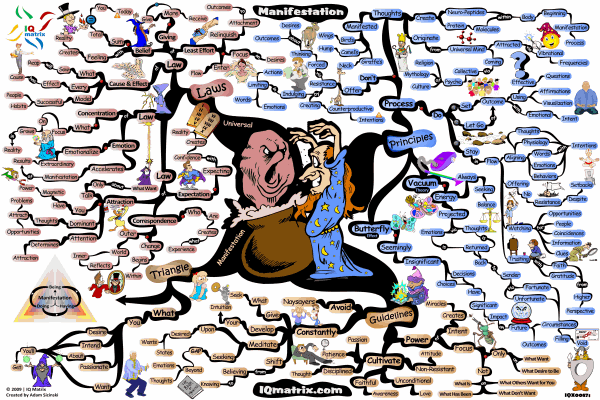
The Manifestation Mind Map presents techniques and strategies to help bring dreams into reality. The Mind Map explains the fundamental principles of Manifestation, provides several guidelines to help with the Manifestation process, discusses the Manifestation Triangle of Being, Doing and Having, and concludes with a look at 9 Laws of Universal Manifestation that you can immediately make use of.
Read More»
The Life Coaching Mistakes Mind Map looks into the common mistakes that Life Coaches make while working with their clients. The Mind Map breaks down the mistakes that Life Coaches make into 4 distinct branches. These categorizations include mistakes made regarding Personal Perceptions; mistakes made during Communication; mistakes made in relation to the Life Coaching Approach; and mistakes made when setting Client Tasks.
Read More»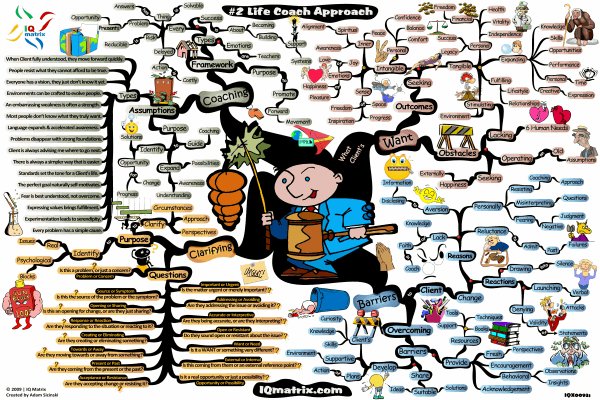
The Life Coaching Approach Mind Map Part 2 delves into the fundamental processes of Life Coaching that naturally support a client’s development and evolution throughout the coaching process. The Mind Map first looks at what a Client Really Wants out of life. These are fundamental things that a Life Coach must address throughout each of their coaching sessions. Next, the Mind Map delves into the Psychological Barriers to Client Change that a Life Coach must account for and effectively deal with if they arise. The 3rd branch of the Mind Map looks at how a Life Coach can utilize Clarifying Questions to help identify psychological blocks while identifying real issues that the client may be unconsciously hiding. The final branch of the Mind Map delves into Coaching Assumptions and Frameworks that are fundamentally important to Life Coaches throughout the Life Coaching process.
Read More»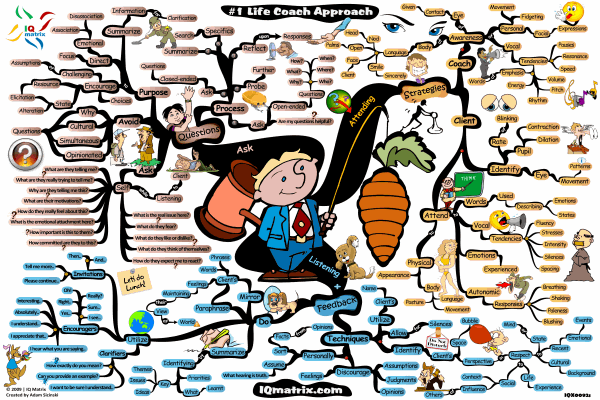
The Life Coaching Approach Mind Map Part 1 delves into the fundamental processes of Life Coaching that naturally support a client’s development and evolution throughout the coaching process. The Mind Map first looks into Attending Strategies. These are patterns of behavior that the Life Coach must observe within themselves and their client in order to keep the channels of communication open. This process is also necessary as it helps obtain the true meaning behind the words that the client uses. Next, the Life Coach must master the art of listening and giving feedback. Hence the 2nd branch of the Mind Map breaks down this significant aspect of Life Coaching. Finally, the Life Coach must become a master of asking effective questions. The final branch of the Mind Map therefore delves into how a Life Coach can ask effective questions to help get a better understanding of their client on a plethora of levels.
Read More»
The Evaluating Reality Mind Map helps guide Life Coaches in evaluating their client’s current reality and circumstances. The Mind Map first presents a series of questions that the Life Coach asks their client in order to help them get a better understanding of their current behavior. Once the client’s behavioral patterns have been identified, the Life Coach delves into the client’s Learning Style – helping them to set effective tasks that will naturally motivate the client to achieve their goals and objectives. Furthermore, the Mind Map looks at how a Life Coach can optimize learning for their client during tasks, and concludes with a look at a client’s Success Strategy – what a client does on a daily basis that helps them naturally achieve their goals and objectives.
Read More»
The Identifying Reality Mind Map helps guide Life Coaches by identifying their client’s Current Reality and circumstances. The Mind Map first looks at obstacles that may be preventing a client from achieving their goals and objectives. Many thought-provoking questions are asked and insights are gained throughout this process. Next the Life Coach looks at the client’s strategy for failure. This is usually an unconscious process that unlocks hidden self-sabotaging patterns of behavior. And finally, the Life Coach analyzes the GAP between where the client is and where they would like to be in life.
Read More»
The Addressing Client Concerns Mind Map helps guide Life Coaches in the process of identifying their client’s major concerns and issues that are preventing them from achieving their goals and objectives. The 1st branch of the Mind Map presents the Life Coach with guidelines that help them obtain their client’s personal story and life situation. Next, the Life Coach helps the client turn their concerns into a metaphor – assisting with problem solving further down the road. Finally, the Life Coach undertakes a process that helps the client Awaken their Unconscious Resources. This process is outlined step-by-step within the Mind Map.
Read More»

